
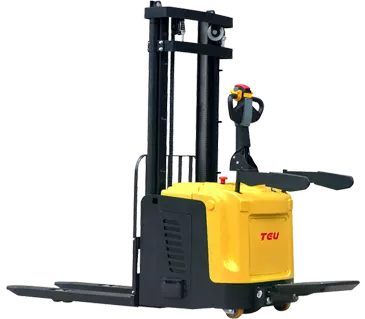
The Industrial Benchmark for Off-Road Excellence
In the global heavy machinery market of 2026, the distinction between a standard material handling unit and a specialized 越野堆高機(RTFL) has become a defining factor for operational success. For international distributors and large-scale industrial buyers, identifying a premier manufacturer is no longer about simple assembly; it is about finding an engineering partner that understands the physics of unstable environments. From the unpaved mines of Western Australia to the mud-slicked construction sites of Northern Europe, the reliability of a rough terrain forklift is the backbone of the supply chain. This article explores the high-level manufacturing principles and technical parameters that separate market leaders from followers.
Structural Integrity: The Chassis as a Foundation
A premier manufacturer begins the design process with the chassis, recognizing it as the structural “spine” of the machine. In a rough terrain environment, the chassis is subjected to constant torsional twisting—forces that would cause a standard warehouse forklift frame to crack or warp over time.
-
Integrated Box-Frame Construction: Leading manufacturers utilize high-tensile steel and automated robotic welding to create a unified box-frame structure. This design offers superior resistance to bending and torsion. By distributing the stress of heavy loads across a reinforced undercarriage, the machine maintains its structural alignment even when navigating deep ruts or traversing 15-degree lateral slopes.
-
The Approach and Departure Geometry: Engineering for “extreme conditions” requires a deep understanding of terrain geometry. High-end manufacturers design their frames with a significant Approach Angle (the angle between the ground and the front tires/mast) and Departure Angle (the angle at which the rear counterweight clears the ground). A 30-degree approach angle is the gold standard, ensuring that the machine can transition from flat ground to steep inclines without the mast digging into the earth.
Drivetrain Synergy and Power Transmission
The true test of a manufacturer lies in how they manage the transfer of power from the engine to the ground. In off-road conditions, “raw power” is useless without “controlled traction.”
-
Full-Time 4WD Systems: Top manufacturers prioritize specialized four-wheel-drive systems equipped with heavy-duty drive axles. These axles are often fitted with planetary reduction gears in the wheel hubs, which multiply torque at the point of contact. This reduces the stress on the central driveshaft and differential, significantly extending the lifespan of the transmission.
-
Differential Lock Technology: To prevent wheel-spin on soft or slick surfaces, manufacturers integrate limited-slip or manual differential locks. This ensures that if one tire loses contact with the ground or slips in the mud, the torque is instantly redirected to the wheels with traction. For a procurement manager, this feature is a non-negotiable indicator of a “professional-grade” machine.
-
Engine-Hydraulic Synchronization: A high-quality manufacturer tunes the engine’s torque curve to match the hydraulic pump’s peak efficiency. This means the operator can lift a maximum load at low travel speeds without stalling the engine—a critical requirement for precision placement on uneven construction footings.
High-Pressure Hydraulics and Heat Dissipation
In the world of rough terrain logistics, hydraulic failure is the leading cause of downtime. Manufacturers who lead the market invest heavily in the “circulatory system” of the forklift.
-
Multi-Way Valve Precision: Precision engineering is visible in the hydraulic valve blocks. High-end units utilize multi-way valves that allow for simultaneous functions (lifting and tilting) without a drop in pressure. This fluid control is essential when leveling a load on a shaky surface.
-
Overbuilt Cooling Systems: Operating in remote, outdoor environments often means dealing with extreme ambient temperatures and high dust concentrations. Leading factories equip their RTFLs with oversized aluminum radiators and high-flow fans. The cooling system is often partitioned to independently manage engine coolant, transmission fluid, and hydraulic oil, ensuring that the machine can operate at a 100% duty cycle in 40°C heat without thermal degradation.
The Mast: Vertical Stability Under Stress
The mast of a 越野堆高機 is more than just a lifting mechanism; it is a cantilevered beam that must survive constant vibration and shock loading.
-
Wide-View Mast Engineering: Visibility is the primary safety parameter in off-road work. By utilizing high-strength, low-alloy steel profiles and optimizing the placement of lift cylinders, manufacturers create a “wide-view” mast. This allows the operator to see the fork tips and the ground obstacles simultaneously, reducing the risk of collisions.
-
Heavy-Duty Roller Bearings: Unlike standard forklifts that operate on smooth floors, RTFL masts face lateral (side-to-side) forces. Manufacturers use oversized, sealed-for-life roller bearings that can withstand these side-thrusts, preventing “mast sway” and ensuring smooth vertical travel even when the chassis is tilted.
Operator-Centric Design and Safety Physics
A machine is only as productive as its operator. Manufacturers who prioritize ergonomics understand that reducing operator fatigue directly correlates to a lower total cost of ownership (TCO).
-
Floating Cabin Technology: To isolate the driver from the violent shocks of driving over rocks and debris, the operator’s compartment is often mounted on a “floating” system using high-density rubber dampers or hydraulic mounts. This reduces Whole-Body Vibration (WBV), a major health concern in the construction and mining industries.
-
Dynamic Stability Factors: Professional manufacturers conduct rigorous stability testing to calculate the dynamic “stability triangle” of the machine. By placing the engine and fuel tanks lower in the chassis, they achieve a lower center of gravity. This mechanical “ballast” allows the forklift to maintain its footprint even during high-reach maneuvers on uncompacted soil.
結論
For the B2B buyer, the purchase of a rough terrain forklift is a multi-year investment. A manufacturer that masters the synergy of heavy-duty hydraulics, reinforced structural frames, and precision drivetrain engineering provides more than just a machine—they provide operational insurance. When selecting a partner, look for those who emphasize these core mechanical parameters, as they are the true markers of quality in the most demanding environments on earth.
TEU: Precision Manufacturing for Rugged Performance
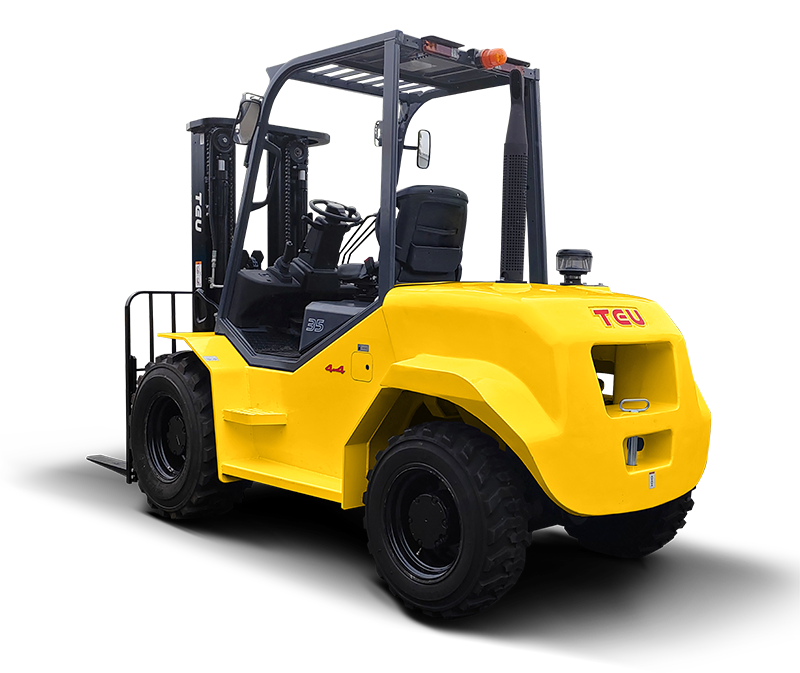
At TEU, we don’t just build forklifts; we engineer solutions for the world’s most challenging terrains. Our FRD Series is a testament to superior manufacturing, representing the pinnacle of off-road material handling technology. Every TEU unit is built with a focus on structural longevity and mechanical efficiency.
這 TEU FRD系列 Advantage:
-
Advanced 4WD Drivetrain: Featuring heavy-duty axles and high-torque output for relentless performance in mud, sand, and gravel.
-
Optimized Stability: Our low center-of-gravity design and wide-base tires ensure maximum confidence during high-lift operations.
-
Industrial-Grade Components: From high-pressure hydraulics to reinforced mast channels, TEU components are selected for their ability to withstand 24/7 outdoor use.
As a leading global manufacturer, TEU offers distributors the perfect balance of technical innovation and rugged durability. Explore the TEU FRD Series today and see how our engineering excellence can elevate your industrial offering and provide your clients with the most reliable rough terrain solution on the market.


