


Electrification Narrative vs. Operational Reality
In the global material handling sector, the year 2025 marks a pivotal moment in the transition toward electrification. While lithium-ion solutions are undeniably advancing, a purely trend-driven procurement strategy can lead to operational inefficiencies. For fleet managers and industrial buyers, the decision between Electric and Internal Combustion (IC) forklifts should not be based on hype, but on a rigorous analysis of duty cycles, load profiles, and environmental variables.
At TEU Forklift, we engineer solutions based on data. Our analysis confirms that for specific high-intensity industrial applications, the Internal Combustion forklift remains the definitive standard for reliability and sustained power output.
The Physics of Performance: Sustained Torque vs. Battery Fade
One of the critical scientific distinctions between IC engines and battery-electric systems lies in the power delivery curve.
In heavy-duty applications—such as lumber processing, construction, or port logistics—equipment is required to lift near-maximum capacity loads repeatedly over 8-12 hour shifts.
Battery Systems: May experience “voltage sag” or performance throttling as the state of charge (SoC) depletes, particularly in extreme temperatures.
IC Powertrains: A diesel or LPG engine delivers linear, non-degrading torque. Whether it is the first hour of the shift or the last, the hydraulic lift speeds and tractive force remain constant.
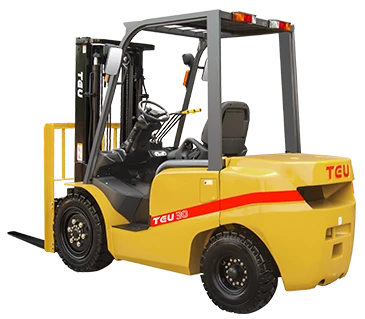
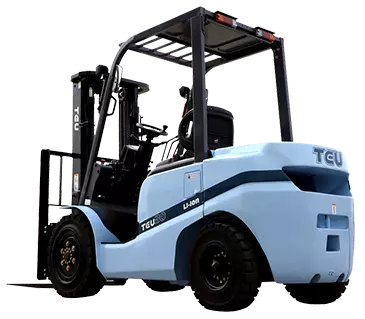
TEU’s IC series integrates industry-standard Japanese powertrains, including ISUZU and Mitsubishi engines. These power units are selected for their high thermal efficiency and ability to maintain peak torque at low RPMs, ensuring that productivity does not fluctuate throughout the workday.
Economic Analysis: CAPEX, OPEX, and ROI
For Small to Medium Enterprises (SMEs), the financial structure of the procurement is often as important as the technical specifications. We must distinguish between Capital Expenditure (CAPEX) and Operating Expenditure (OPEX).
The CAPEX Advantage
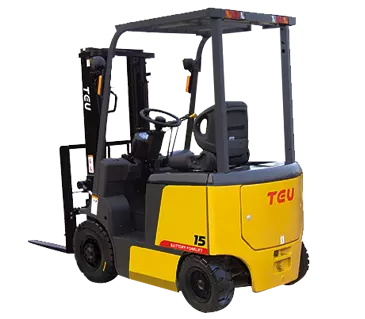
Electric forklifts, particularly those with high-voltage lithium batteries, command a significant upfront premium—often 30% to 50% higher than an equivalent IC model. For businesses prioritizing cash flow or those with seasonal demand fluctuations, this high entry barrier can negatively impact Return on Investment (ROI).
TEU leverages mature supply chains and streamlined manufacturing processes to offer IC forklifts that minimize CAPEX without compromising structural integrity. This allows businesses to acquire a fleet of three TEU IC forklifts for roughly the cost of two premium electric units, offering immediate scalability.
Operational Continuity: The Refueling Window
In logistics, downtime is the enemy of profitability.
While fast-charging technology is improving, it still requires a fundamental change in infrastructure and workflow behavior.
An IC forklift offers superior “energy density recovery.”
Refueling Protocol: A diesel tank or LPG cylinder can be refilled or swapped in under 5 minutes.
Infrastructure Independence: IC forklifts do not require the installation of expensive charging stations, grid upgrades, or cool-down zones.
For outdoor yards, construction sites, or facilities with unstable power grids, the autonomy of a TEU IC forklift is a strategic asset. Our Dual-Fuel (LPG/Gasoline) models further enhance this flexibility, allowing operators to switch fuel sources instantaneously based on availability or indoor/outdoor requirements.
Environmental Adaptability and Durability
Semiconductor-based equipment (electric) is inherently sensitive to environmental stressors. In contrast, Internal Combustion engines are robust thermodynamic systems designed for resilience.
TEU’s IC forklifts are engineered with IP-rated weather protection and heavy-duty cooling systems.
They operate effectively in:
High Precipitation: Rain and snow do not pose the same short-circuit risks as they do to electric components.
Temperature Extremes: From sub-zero cold storage (where battery chemistry slows down) to high-heat foundry environments.
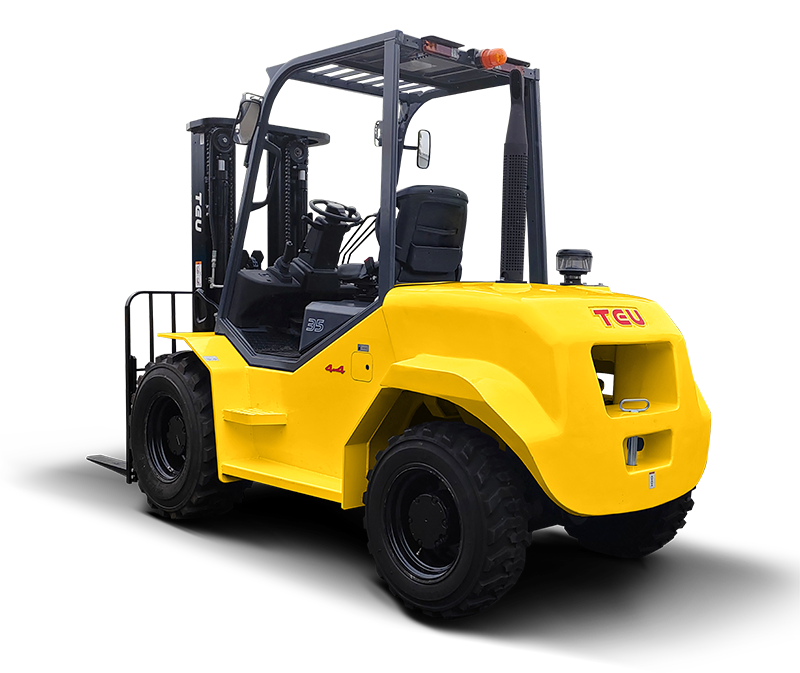
Rough Terrain: The naturally heavier chassis of an IC forklift provides a lower center of gravity and superior traction on unpaved surfaces.
Conclusion: Making the Data-Driven Decision
The “death” of the internal combustion engine in material handling has been greatly exaggerated. While electric trucks have their place in clean, indoor warehousing, the IC forklift remains the backbone of heavy industry.
For operations that demand unyielding power, rapid energy replenishment, and lower initial capital outlay, the TEU IC Series Forklift is not just a traditional choice—it is the engineered solution for 2026 and beyond.

FCG SERIES