


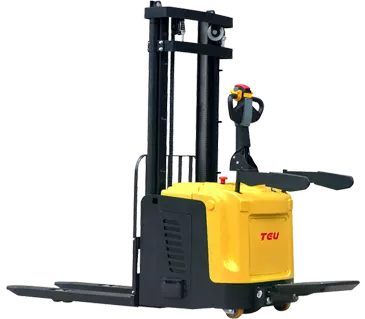
The Variable Physics of Outdoor Logistics
In the controlled environment of a warehouse, material handling is a predictable equation: flat concrete floors, standardized racking, and climate control. However, in outdoor sectors such as construction, lumber processing, and aggregate mining, the variables change drastically.
The physics of outdoor logistics demands equipment that can overcome high rolling resistance (mud, gravel), dynamic instability (uneven gradients), and thermal stress. While electrification is progressing, the thermodynamic efficiency and mechanical torque of the diesel internal combustion engine remain the superior solution for payloads exceeding 5 tons in unstructured environments.
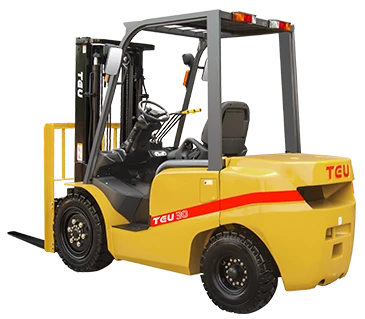
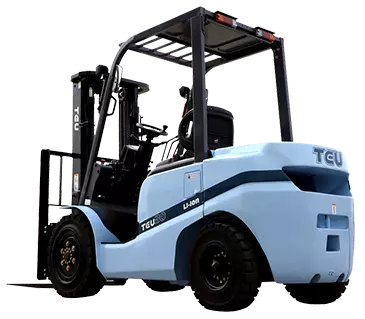
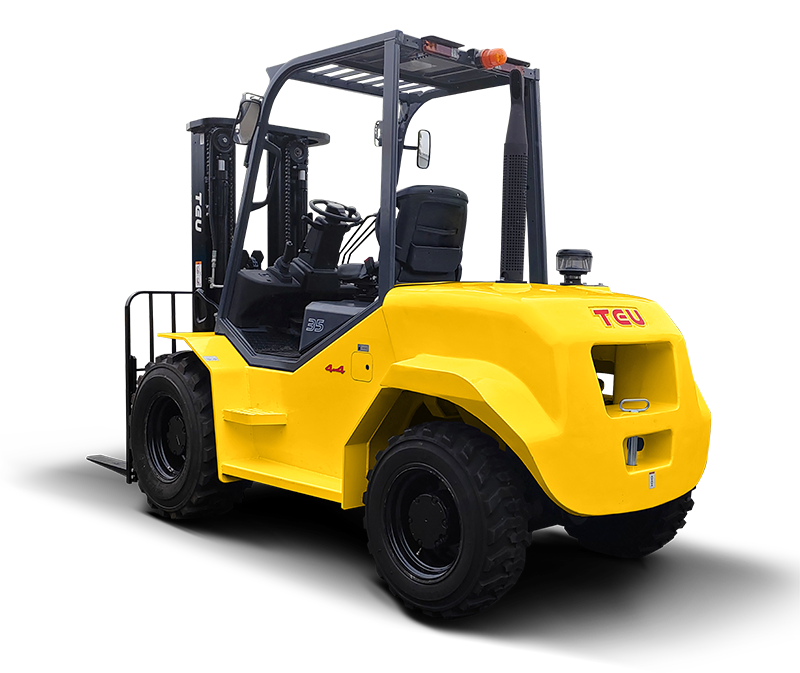
This technical analysis explores why TEU’s FD Series (Diesel 5.0-10.0T) is engineered specifically to mitigate the risks associated with heavy-duty outdoor operations.
Powertrain Dynamics: The Necessity of Low-RPM Torque
The core requirement for moving heavy loads on inclines is not just horsepower, but torque availability at low revolutions per minute (RPM).
Electric motors can struggle with thermal management under sustained heavy climbing loads due to battery discharge rates. In contrast, the TEU FD Series utilizes industrial-grade powertrains, specifically the ISUZU 6BG1 and Mitsubishi S6S engines.
Torque Curve: These engines are tuned to deliver peak torque early in the rev range. This allows the forklift to initiate movement on a slope (Gradeability) with a full load without stalling or excessive engine strain.
Thermal Efficiency: The cast-iron block construction and high-capacity cooling systems ensure that the engine operates within optimal thermal limits even during 12-hour shifts in ambient temperatures exceeding 40°C.
Global Serviceability: From a fleet management perspective, utilizing engines with a global parts footprint (Isuzu/Mitsubishi) reduces the Mean Time to Repair (MTTR).
Structural Mechanics: Chassis Rigidity and Load Center Stability
Lifting a 10-ton marble block or a stack of steel beams introduces significant torsional stress to the forklift frame. Inferior manufacturing often leads to chassis fatigue or mast deflection (bending) at maximum lift height.
TEU employs a Finite Element Analysis (FEA) approach to chassis design:
Reinforced Monocoque Frame: We utilize high-tensile steel in critical stress zones. This increases torsional rigidity, ensuring that the forklift remains stable even when cornering with an elevated load.
Wide-View Mast Geometry: The mast assembly is designed not just for strength, but for optics. By optimizing the placement of hydraulic cylinders and chains, we increase the operator’s field of vision, reducing the likelihood of impact damage in cluttered yards.
Counterweight Distribution: The center of gravity is precisely calculated to maximize residual capacity, ensuring the truck remains planted during dynamic braking events.
Tribology and Traction: Conquering the Terrain
“Rolling resistance” is the force resisting the motion when a tire rolls on a surface. On loose gravel or mud, this resistance increases exponentially compared to concrete.
TEU’s heavy-duty diesel forklifts are engineered to overcome high friction coefficients:
Pneumatic vs. Super-Elastic Tires: We offer specialized tire compounds designed for puncture resistance and shock absorption. The tread patterns are aggressive, designed to self-clean mud and maintain traction.
Differential Gearing: The drive axle is built to handle shock loads. If one wheel encounters a slip condition, the robust differential ensures power is transferred effectively to maintain forward momentum.
Human Factors Engineering: Reducing Whole-Body Vibration (WBV)
Operator fatigue is a quantifiable safety risk. In rough terrain operations, Whole-Body Vibration (WBV) can lead to musculoskeletal disorders and decreased reaction times.
TEU approaches the operator cabin as an isolation capsule:
Hydraulic Suspension Mounts: The cabin is separated from the chassis by hydraulic damping mounts that absorb high-frequency engine vibrations and low-frequency terrain shocks.
Ergonomic Interface: The separation of the brake and inching pedals allows for precise low-speed control, essential when positioning heavy loads in tight spaces.
The ROI of Durability
In heavy industry, the cost of a forklift is not defined by its purchase price, but by its Total Cost of Ownership (TCO) over 10,000 hours.
A “cheap” forklift that suffers from cracked welds or overheating engines will cost exponentially more in downtime. TEU’s Diesel FD Series represents a convergence of Japanese powertrain reliability and robust structural engineering. It is not just a vehicle; it is a capital asset built to withstand the harshest kinetic forces of the outdoor world.
Engineered for the Extremes.
For detailed load charts and engine specifications of the TEU FD Series (5-10 Tons), contact our technical sales division.
